
Clear pores, no strip, no trapped heat. Just 15 cool minutes.
Here is the uncomfortable truth about oily skin: the mask that makes your face feel the cleanest is often the one making it oilier by tomorrow afternoon.
That squeaky, tight, "finally, no shine" feeling after a strong mask feels like proof it worked. On oily, acne-prone skin living in Malaysian heat, it is usually proof that the mask took too much. And skin that has been stripped does not stay quiet. It answers with more oil, and more oil sitting in warm, humid pores is exactly how the next breakout gets started.
What oily skin actually needs is a mask that clears your pores and then leaves your skin alone. Here is how the 3 main formats compare, and what we would actually reach for.
Not sure your skin is truly oily? Start with our hub guide on how to choose a face mask for your skin type.
Why oily skin is a different problem in Malaysia
Most face mask advice is written for temperate climates, where oily skin means a shiny T-zone by lunch. Here it is a full-day loop.
You step outside into 33°C and humidity, and the oil and sweat arrive together. Then you sit in an air-conditioned office for 8 hours while the cold, dry air quietly pulls water out of your skin. By evening your face is shiny on top and tight underneath. A lot of people describe their skin in exactly 3 words: acne-prone, oily, sweaty. All at once, every day, all year.
That second half matters. Plenty of "oily" skin here is actually oily and dehydrated at the same time, which is why harsh oil control keeps backfiring. If your face feels tight after cleansing but shiny an hour later, read your skin is dehydrated, not oily before you buy anything stronger. The office side of the cycle is covered in our air-conditioned office routine.
What oily, acne-prone skin actually needs from a mask
Before comparing products, here is the checklist. A good mask for this skin type should:
- Clear what is sitting in the pores. Oil, sweat, dead skin and the buildup that turns into blackheads.
- Stop short of stripping. Clean should not feel tight. Tight means your barrier just lost water it needed.
- Not trap heat against the skin. Anything that sits warm and sealed on an oily face for hours is working against you in this climate.
- Feel calm, not spicy. If a mask tingles or burns within 5 minutes, that is not "working". On reactive, breakout-prone skin it is a warning.
- Leave with water. No sticky film left behind to mix with tomorrow's sweat.
Keep those 5 in mind. They make the comparison below much easier to read.
Clay vs jelly vs sheet: the oil-control comparison
| Clay / mud mask | Sheet mask | Black jelly mask (wash-off) | |
|---|---|---|---|
| How it works on oil | Soaks up oil as it dries | Mostly hydrates; little oil control | Charcoal and glycolic acid lift buildup, then rinse off |
| Pore clearing | Strong | Low | Strong |
| After-feel | Tight, squeaky, often parched | Damp, often sticky | Clean, cool and still soft |
| Risk for oily skin | Over-stripping, rebound oil | Serum film can feel heavy and clog | Low when used 2 to 3 times a week |
| Heat on the skin | Dries hard, pulls as it sets | Sealed sheet holds warmth | Stays cool and soft the whole 15 minutes |
| Sensitive or breakout-prone skin | Can sting when fully dry | Fragranced serums can irritate | Soothing botanicals (aloe vera, witch hazel, chamomile); patch test first |
| Mess | Cracks, flakes, stains the sink | Drips, slides, poor fit | Scoop, spread, rinse |
| How often | 1 to 2 times a week | Varies | 2 to 3 times a week |
Clay: strong clean, high cost
Clay is the classic choice for oily skin, and it does clean deeply. The problem is that it does not know when to stop. As it dries down hard, it keeps pulling, first the oil, then the water your skin was holding on to. That is the tight, cracked feeling. Used now and then on very oily skin it is fine. Used often in our climate, it tends to trigger the rebound oil you were trying to control. We went deeper on this in clay mask vs jelly mask.
Sheet masks: hydration, not oil control
Sheet masks are built to hydrate, which is useful, but they do almost nothing for congestion. On an oily face, a serum-soaked sheet often leaves a sticky layer behind, and the most common complaint from oily skin is simple: it only hydrates, and some of them leave you with more bumps than you started with. If you have ever broken out after a mask and wondered why, why your face mask is causing breakouts walks through the usual culprits.
Jelly: the deep clean that rinses away
A wash-off jelly mask is the format that ticks all 5 boxes. It clears pores like clay, but it never dries down, so there is no stage where it starts pulling water out of your skin. It stays cool and soft against your face, and after 15 minutes it simply rinses off.
A word of caution: not every jelly is a wash-off jelly. Many gel masks are designed to stay on overnight, and leaving a sealed gel on oily skin for 8 hours is one of the most common ways to wake up red, warm and congested. For acne-prone skin, look for a mask you rinse off, not one you sleep in.
Our pick: the Deep Cleansing Black Jelly Mask
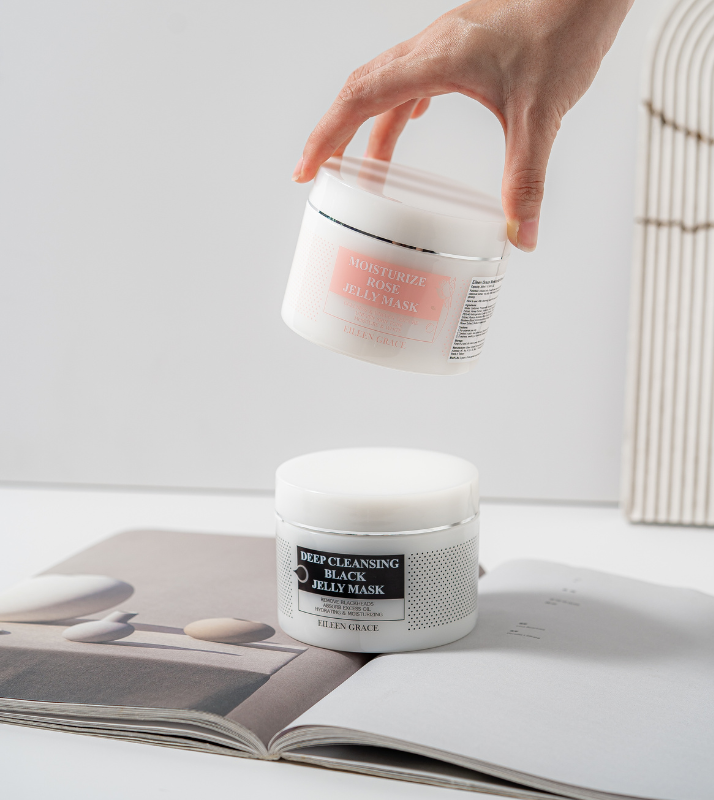
For oily and acne-prone skin, the mask we recommend is the Deep Cleansing Black Jelly Mask.
Here is what is inside and why it matters for this skin type:
- Activated charcoal lifts away surface oil, sweat and the buildup that clogs pores and turns into blackheads.
- Glycolic acid (AHA) gently loosens dead skin cells so pores stay clearer and rough texture smooths out.
- Aloe vera, witch hazel and chamomile keep the experience calm, which is the part most deep-cleansing masks forget.
- A cool jelly texture that feels refreshing the moment it touches warm skin, especially straight from the fridge.
The result after rinsing is the feeling oily skin rarely gets from a deep clean: less shine, clearer-looking pores, and skin that still feels soft instead of tight.
Masks that strip you dry so your skin pumps out more oil by 3pm? This one doesn't. Sealed gels that sit on your face all night and leave you red and congested? We don't do that either. 15 minutes, then it is gone.
If your main concern is blackheads around the nose and chin, our guide on how to remove blackheads without squeezing shows how to use this same mask for that.
How to use it on oily, acne-prone skin
- Cleanse first so the mask works on clean skin, not on the day's sunscreen and sweat.
- Chill the jar in the fridge. Optional, but on a hot day that cold first touch is the best part.
- Scoop with the spatula and apply a thick, generous layer. Thick enough that you cannot see your skin through it. A thin smear gives you less cooling and less contact with skin.
- Leave it on for 15 minutes. Not overnight, and no need to wait for anything to harden. It will not.
- Rinse off with lukewarm water until the slippery feeling is gone, then pat dry.
- Follow with a light, oil-free moisturiser. Oily skin still needs water. Skipping this step is how the rebound starts.
How often: 2 to 3 times a week. The glycolic acid that keeps pores clear also needs rest days. Masking every night will not clear your skin faster. It just thins out your barrier until everything starts to sting. For a fuller schedule, see how often to use a face mask.
On the nights you skip the mask, an Acne Care Essence can sit in your routine for breakout-prone areas.
What to expect, week by week
Every face is different, but this is the pattern most oily skin follows with a wash-off deep clean used 2 to 3 times a week.
- After the first use: Your face feels clean and cool, but not tight. That alone is a change if you are used to clay.
- Week 1 to 2: Midday shine starts arriving a little later. If your skin ever feels irritated, stop and patch test before the next use.
- Week 3 to 4: Pores on the nose and cheeks look clearer and less clogged, and makeup sits better on the T-zone. Results vary from face to face.
- After 4 weeks: The routine feels like maintenance rather than rescue. Fewer "what is happening to my face" mornings.
3 habits that undo any good mask
- Scrubbing right after rinsing. The mask already exfoliated. Adding a scrub on the same night is how calm skin turns red.
- Masking oily skin daily with an acid mask. More is not better. Stick to 2 to 3 times a week.
- Chasing the squeaky feeling. If your skin feels tight, something took too much. Clean and comfortable is the goal.
FAQ
What is the best face mask for oily skin in Malaysia?
For oily skin in hot, humid weather, a wash-off jelly mask with charcoal and a gentle acid is usually the best fit. It clears pores like clay but does not dry down or strip, which helps avoid the rebound oil that clay often triggers.
Is a clay mask or jelly mask better for acne-prone skin?
Clay cleans strongly but can leave skin tight and dry, which may lead to more oil. A wash-off jelly mask clears pores while staying cool and soft, so it suits oily and acne-prone skin better for regular use. If your skin is sensitive, patch test first.
How often should I use a face mask if I have oily skin?
A deep cleansing mask with AHA works best 2 to 3 times a week. Daily use can weaken your skin barrier and make it more reactive.
Can I leave a jelly mask on overnight?
Not this one. The Deep Cleansing Black Jelly Mask is a wash-off mask. Apply a thick layer, leave it on for 15 minutes, then rinse it off. Sealed overnight gels can trap heat and sweat on oily skin.
Are sheet masks good for oily skin?
Sheet masks mainly hydrate and do little for oil or clogged pores. Some leave a sticky serum film that can feel heavy on oily skin. They work better as an occasional hydration boost than as your oil-control step.
The bottom line
Oily, acne-prone skin does not need a harsher mask. It needs a mask that clears the pores, keeps the skin cool, and then leaves.
That is what the Black Jelly Mask was made for. Chill it, scoop it thick, give it 15 minutes, rinse. Your skin gets the deep clean without paying for it the next afternoon.
New to it? Start small with the 35ml trial pack, or go straight to the full-size jar. Still deciding between the 2 Eileen Grace jelly masks? Here is how the Rose and Black Jelly Mask compare.
Your cool-down ritual awaits.