
You finally found a face mask you love. Your skin looked plump and calm the morning after, and now you are standing at the sink wondering the obvious next thing: can I do this every day, or am I overdoing it?
It is one of the most common questions we hear, and the honest answer is that there is no single magic number. Every day, twice a week, once a fortnight, they can all be correct. It depends entirely on what kind of mask you are holding and what your skin actually needs.
So here is the simple way to think about it, the right frequency for each type of mask, and how often your skin type should be masking in Malaysia's heat and aircon.
The one rule that clears up all the confusion
Before any numbers, learn this single idea and you will never have to search "how often face mask" again.
How often you can use a mask depends on whether it adds something or takes something away.
Masks that ADD to your skin, mostly water and hydration, are gentle. You can use them often, some as often as every day, because they are not stripping or stressing your barrier. They are giving, not taking.
Masks that TAKE something away, like clay pulling oil out of your pores or acids dissolving dead skin, are doing more aggressive work. Use those too often and you start damaging the very barrier you are trying to improve. These are the ones with real limits.
Keep that add-versus-take-away idea in your head and every rule below will make sense.
How often to use each type of mask

Hydrating masks: as often as you like, even daily
A hydrating mask floods your skin with water and humectants and then you are done. Nothing is being stripped, so there is no reason to ration it. For most people in Malaysia, where aircon quietly pulls water out of your skin for 8 to 9 hours a day, a daily hydrating mask is not too much. It is often exactly what dry, tired skin is asking for.
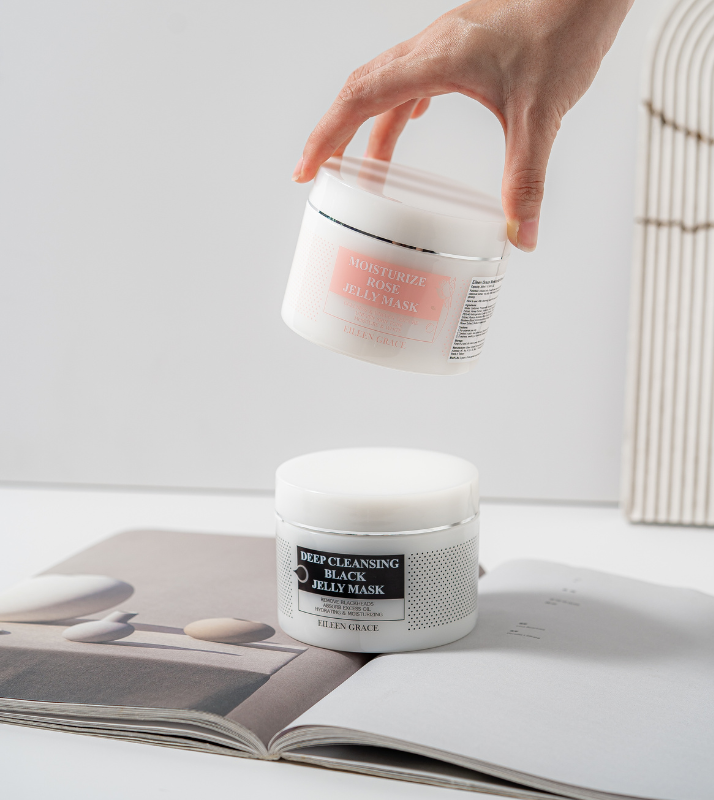
This is why the Eileen Grace Moisturize Rose Jelly Mask is built for daily use. You scoop a layer over your whole face, leave it for 15 minutes, then rinse it off clean. The bouncy, water-rich jelly soaks the top layers with moisture and rose extract without any clay drawing moisture out or alcohol degreasing the surface, so you finish soft and cushioned instead of tight. It is plant-based, alcohol-free, paraben-free, certified by SGS, ECOCERT and KKM NPRA Malaysia, and gentle enough for sensitive skin and for women who are pregnant or breastfeeding, which is exactly what a mask needs to be if you want to reach for it every night.
Hydrating sheet masks live in this same easy category. There is no hard weekly limit on adding water. The only real difference is that a jar you can use nightly works out kinder on your wallet than a new sheet every day.

Deep-cleansing clay and charcoal masks: 2 to 3 times a week
These are the pore-clearing, oil-absorbing masks, and they are the ones people most often overuse. It is easy to see why. Your skin feels so clean the moment you rinse that doing it more often feels like it should mean cleaner skin. It does the opposite. Push a deep-cleansing mask past 2 to 3 times a week and you strip the barrier, and stripped skin gets tight, flaky, and ironically oilier as it overproduces to compensate.
A gentler deep clean gives you more room here. The Eileen Grace Deep Cleansing Black Jelly Mask clears pores and lifts blackheads without the bone-dry, cracked feeling a traditional clay mask leaves behind, so 2 to 3 nights a week keeps congestion down without wrecking your barrier. If you want the full comparison, we broke it down in clay mask vs jelly mask.
Exfoliating and acid masks: 1 to 2 times a week
Masks built around AHAs or BHAs, like glycolic or salicylic, dissolve dead skin and unclog pores. They work, but they are the most aggressive thing in this list, so they get the tightest limit: 1 to 2 times a week, and less if your skin is sensitive. The classic mistake is stacking an acid mask on top of an acid toner and an acid serum you are already using every day. That is not a routine, that is a slow barrier burn. If acids are already in your daily steps, you may not need an acid mask at all.
Sheet masks: whenever you want a ritual
Keep your sheet masks. A cooling sheet mask on a Sunday, before an event, or after a long-haul flight is a lovely ritual, and because most are hydrating, there is no strict frequency rule. Think of them as an occasional treat rather than a daily workhorse. For the nightly hydration your Malaysian skin actually needs, a jelly mask is simpler, faster to rinse, and lasts far longer than a drawer of single-use sheets.
How often should you mask, by skin type
The mask type sets the outer limit. Your skin type fine-tunes it.
Oily and combination skin. You can deep-clean 2 to 3 times a week, but do not skip hydration in between. Most oily skin in Malaysia is actually dehydrated and oily at the same time, which is a real and confusing combination we explained in dehydrated skin vs oily skin. Alternate a deep-cleansing mask with a hydrating one and your oil often calms down on its own. If your combination skin needs zone-specific care, our combination skin multi-masking guide walks through it.
Dry and dehydrated skin. Hydrating masks daily, deep-cleansing masks rarely, once a week at most. Your barrier is already thirsty, so lean almost entirely on the masks that add water.
Sensitive skin. Go gentle and go slow. A soothing hydrating mask a few times a week, or even nightly if it is gentle enough, and treat clay and acids with real caution, once a week maximum, and stop at the first sign of stinging.
Acne-prone skin. A deep-cleansing mask 2 to 3 times a week helps keep pores clear, but pair it with plenty of hydration so your skin does not overproduce oil. If breakouts are your main worry, our guide on how to remove blackheads without squeezing walks through the gentle approach.
Why Malaysia changes the maths
Most masking advice is written for cold, dry countries and it does not quite fit here. There are 2 differences that matter.
First, the aircon. A full day in cold, dry, air-conditioned offices, cars and malls pulls water out of your skin without you feeling it, so hydrating masks earn a place in your routine far more often here than the once-a-week most guides suggest.
Second, the humidity. Because the air outside is heavy and wet, your skin rarely needs thick, occlusive, heavy-duty masks. Light, water-rich hydration used often beats a heavy mask used occasionally.
5 signs you are over-masking
Your skin will tell you before anything else does. Watch for these.
- Tightness that does not go away after you moisturise.
- New redness or flushing that was not there before.
- Stinging when you apply products that never used to sting.
- More breakouts, not fewer, a sign your barrier is stressed.
- Flaky patches next to oily ones, the look of a confused, over-worked barrier.
If you spot these, stop all deep-cleansing and exfoliating masks for 1 to 2 weeks and use only a gentle hydrating mask while your skin recovers.
A simple weekly masking schedule
If you want one clear plan to copy, here is a balanced week for typical Malaysian skin.
- Most nights: a 15-minute hydrating rose jelly layer to replace the water aircon took all day.
- 2 to 3 nights a week: swap in a deep-cleansing black jelly mask when your T-zone feels congested, then go straight back to hydration the next night.
- Once a week, optional: an exfoliating or acid mask, only if acids are not already in your daily routine.
- Whenever you like: a sheet mask as a treat.
That is the whole system. Hydrate often, deep-clean in moderation, exfoliate sparingly, and let your skin, not a rule online, tell you when to ease off.
Ready to build your own rhythm?
The best masking frequency is not a number you copy from someone else. It is the rhythm your own skin settles into once you stop stripping it and start giving it water it can hold. A gentle daily hydrator like the Eileen Grace Moisturize Rose Jelly Mask makes that easy, because it is one of the few masks you never have to ration.
Start with hydration most nights, add a deep clean when you need it, and let the rest follow. For the full nightly lineup, see our night skincare routine for Malaysian weather.
Frequently asked questions
Can I use a face mask every day? It depends on the mask. A gentle, water-based hydrating mask like a rose jelly is designed for daily use, so a nightly 15-minute layer is fine and often ideal in Malaysia's drying aircon. Deep-cleansing clay and exfoliating acid masks should stay at 2 to 3 and 1 to 2 times a week.
How often should I use a clay or deep-cleansing mask? 2 to 3 times a week is the safe ceiling for most skin. More than that tends to strip your barrier and leave skin tight, flaky and oilier. A gentler deep clean like a black jelly mask gives you that 2 to 3 times a week without the parched finish.
Is it bad to use a face mask too often? It can be, if it is the wrong kind. Overusing clay or acid masks damages your skin barrier, which shows up as tightness, redness, stinging and more breakouts. Overusing a gentle hydrating mask is far less of a problem, since it only adds water.
How often should oily skin use a face mask? Deep-clean 2 to 3 times a week, but hydrate on the nights in between. Oily skin in Malaysia is very often dehydrated underneath, and stripping it more only pushes it to make more oil.
Do I still need to hydrate if I have a deep-cleansing mask? Yes, always. Deep-cleansing masks take oil and buildup away, so you need to put water back on the other nights. Pairing them is what keeps skin clear without leaving it tight and stripped.
Related reads: Clay Mask vs Jelly Mask | Your Skin Is Dehydrated, Not Oily | How to Remove Blackheads Without Squeezing