
Your products did not change. Your skin did.
Here is a pattern we hear constantly: a routine that worked for years suddenly turns on you. The toner that never stung now stings. Your face feels tight 10 minutes after cleansing, then turns oily by noon, then flakes around the nose by evening. You add more products to fix it, and everything gets worse.
That pattern has a name, and it is not "sensitive skin". It is a damaged skin barrier. The good news: unlike genetics or pore size, a barrier is something you can actually repair, usually in a few weeks, mostly by doing less.
What your skin barrier actually is
Think of the outermost layer of your skin as a brick wall.
The bricks are flattened skin cells. The mortar between them is a mix of natural fats called lipids: ceramides, cholesterol and fatty acids. Together they do 2 jobs at once: keep water in, and keep irritants, bacteria and pollution out.
When the wall is intact, water stays put and irritants bounce off. Skin feels calm and looks even.
When the mortar gets stripped away, the wall turns leaky. Water escapes constantly, which is why damaged skin feels tight and dehydrated no matter how much you drink. And irritants slip in through the cracks, which is why products that never bothered you suddenly sting. Same toner, different wall.
7 signs your barrier is damaged
You do not need all 7. If 3 or more feel familiar, keep reading.
- Products that were fine now sting or burn, even plain moisturiser.
- Tightness right after cleansing, like your face is 1 size too small.
- Oily and flaky at the same time. Shine on the T-zone, dry patches around the nose and mouth.
- Redness that lingers, especially after washing or being out in the heat.
- Sudden small breakouts in places you do not usually get them.
- Rough, dull texture that makeup clings to unevenly.
- Itchiness or a warm, reactive feeling at the end of the day.
That oily-but-flaky combination confuses more people than any other sign. Your skin is losing water through the leaky wall, so it pumps out extra oil to compensate. We unpacked that cycle in dehydrated skin vs oily skin, and a damaged barrier is very often what is sitting underneath it.
How barriers get damaged in Malaysia specifically
Most barrier advice online blames cold, dry weather. That is not our problem here. In Malaysia the damage usually comes from the routine itself, plus a climate that punishes the mistakes faster.
Over-exfoliation. This is the number 1 cause we see. An acid toner in the morning, a scrub twice a week, an exfoliating serum at night, and none of them feels harsh on its own. Together they are sanding the mortar out of the wall faster than your skin can rebuild it. If you are layering acids without a plan, start with our guide to glycolic acid vs salicylic acid and pick 1.
Over-cleansing. Sweaty climate, so you wash. Oily by noon, so you wash again. A foaming cleanser 3 times a day strips the exact lipids your barrier is made of. Twice is the ceiling, and once at night is the one that matters.
Aircon dehydration. 8 or 9 hours a day in an office, car or mall where the air conditioning is quietly pulling water out of your skin. A leaky barrier loses water even faster in that environment. We covered the full mechanism in the aircon office skincare guide.
Hot showers on the face. Water that feels nice on your shoulders is too hot for your face. It melts lipids like warm water melts butter.
Sweat plus friction. Wiping your face with tissue or your hand a dozen times a day adds up to a lot of low-grade scrubbing.
How to repair it: the 4-week plan
Repairing a barrier is genuinely simple, which is different from easy. The hard part is resisting the urge to add products. Repair is subtraction first.
Week 1: stop the damage.
Cut all exfoliating acids, scrubs, retinoids and clay masks. Not forever, just for now. Cleanse once at night with a gentle, low-foam cleanser and lukewarm water. In the morning, water is enough. It will feel like you are not doing skincare. That is the repair.
Weeks 1 to 4: put water back, then seal it.
A damaged barrier needs 2 things layered in order: humectants to draw water into the skin (look for glycerin, hyaluronic acid, panthenol), then a moisturiser on top to slow the leak while the wall rebuilds. Ceramides and squalane in a moisturiser are a bonus, since they resemble the mortar you are replacing.
Every day: sunscreen.
A damaged barrier lets UV do more harm than usual. This step is not optional during repair.
Weeks 2 to 4: let it get boring.
Boring is the sign it is working. Sting fades first, usually within days. Tightness eases in 1 to 2 weeks. The oily-flaky combination and lingering redness take the longest, usually 3 to 4 weeks, because that is roughly 1 full cycle of skin renewal.
If nothing improves after 6 weeks, or your skin is cracked, weeping or persistently inflamed, stop self-treating and see a dermatologist. That is beyond what any routine fixes.
Where a jelly mask fits in barrier repair
During repair you have to drop most of your actives, and that is exactly when a water-based mask earns its place.
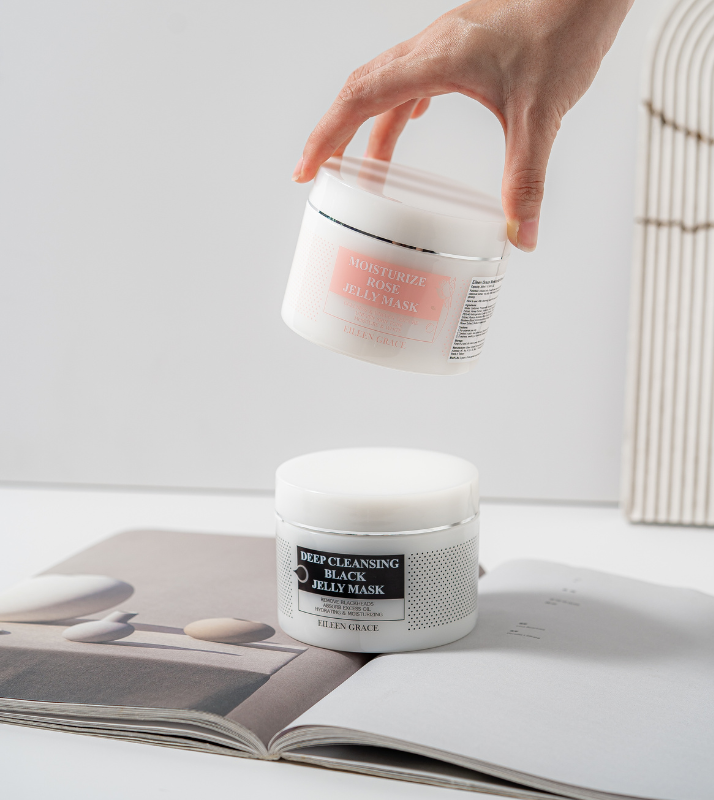
The Eileen Grace Moisturize Rose Jelly Mask works the way a repairing barrier wants to be cared for. It is a thick layer of chilled, water-based jelly that sits on the skin for 15 minutes and rinses off with water. No rubbing, no fibres dragging across reactive skin, no leave-on film to second-guess. The jelly holds water against your face for the full 15 minutes, which is the humectant step delivered in the gentlest format there is, and the cool temperature calms the warm, reactive feeling of a stressed barrier.
It is plant based, alcohol free and paraben free, gentle enough to use daily while you repair, a rhythm we covered in how often you should use a face mask. Keep the jar in the fridge and it doubles as the most pleasant 15 minutes of the whole plan.
New to it? The 35ml trial pack is enough for about a week of repair evenings.
One honest boundary: no mask rebuilds a barrier by itself. Hydration supports the repair. Stopping the damage is what allows it.
5 habits that quietly undo the repair
- "My skin looks better, I can exfoliate again." On day 10, this restarts the clock. Wait for week 4, then bring back 1 acid, once a week.
- Testing whether it still stings. Applying the old toner "just to check" is re-injuring the wall to see if it healed.
- Hot showers straight on the face. Lukewarm, always.
- Adding 3 new "barrier repair" products at once. If something reacts, you will not know which one. Add 1 thing per week.
- Skipping sunscreen because you are indoors. Window seats and driving count as sun exposure.
What to expect, week by week
| Week | What you will notice |
|---|---|
| 1 | Stinging fades. Skin still feels tight but stops getting worse. |
| 2 | Tightness after cleansing eases. Redness calms. |
| 3 | Flaky patches shrink. Oil production starts to level off. |
| 4 | Texture smooths, makeup sits evenly, old products stop feeling like a gamble. |
Frequently asked questions
How long does a damaged skin barrier take to repair?
Most people see stinging fade within days and full recovery in 3 to 6 weeks, roughly 1 to 2 skin renewal cycles. The more damage, the longer the tail.
How do I know if my barrier is damaged or my skin is just dehydrated?
They overlap, and a damaged barrier causes dehydration. The tell is irritation: if products sting and your skin turns red easily, it is barrier damage, not just thirst.
Can I still use a face mask with a damaged barrier?
Yes, if it is a rinse-off hydrating mask with no acids, clay or fragrance-heavy formula, and you apply it without rubbing. Skip peel-off masks entirely until the barrier recovers.
Can I exfoliate during barrier repair?
No. That is the single most common reason repair fails. Pause all acids and scrubs for 4 weeks, then reintroduce 1, once a week.
Does drinking more water fix a damaged barrier?
It helps your body, but it cannot patch the wall. The water escapes through the damaged barrier regardless. You need to stop the damage and seal water in from the outside.
Is a damaged skin barrier permanent?
No. The barrier rebuilds itself constantly. Given a few quiet weeks, it repairs on its own. That is also why prevention is just a lighter version of the fix: fewer acids, gentler cleansing, daily hydration.
The bottom line
A damaged barrier is not a new skin type you have to live with. It is an injury, and injuries heal when you stop re-injuring them.
Strip the routine back, put water in, seal it, protect it from the sun, and let 4 boring weeks pass.
And if you want the repair to come with 1 genuinely pleasant ritual: a chilled scoop of jelly, 15 quiet minutes, rinse. Your barrier does the rest.